NORTHSTAR / OPEN ACTIONSIllustrative matter
This demonstration changes only this page. No messages are sent and no systems are connected.
FROM BUSINESS NEED TO COMPLETED WORK
Business requests and emerging signals bring context together. Authorised work moves forward. Decisions surface to the people who need to make them.
Follow a distribution agreement ↗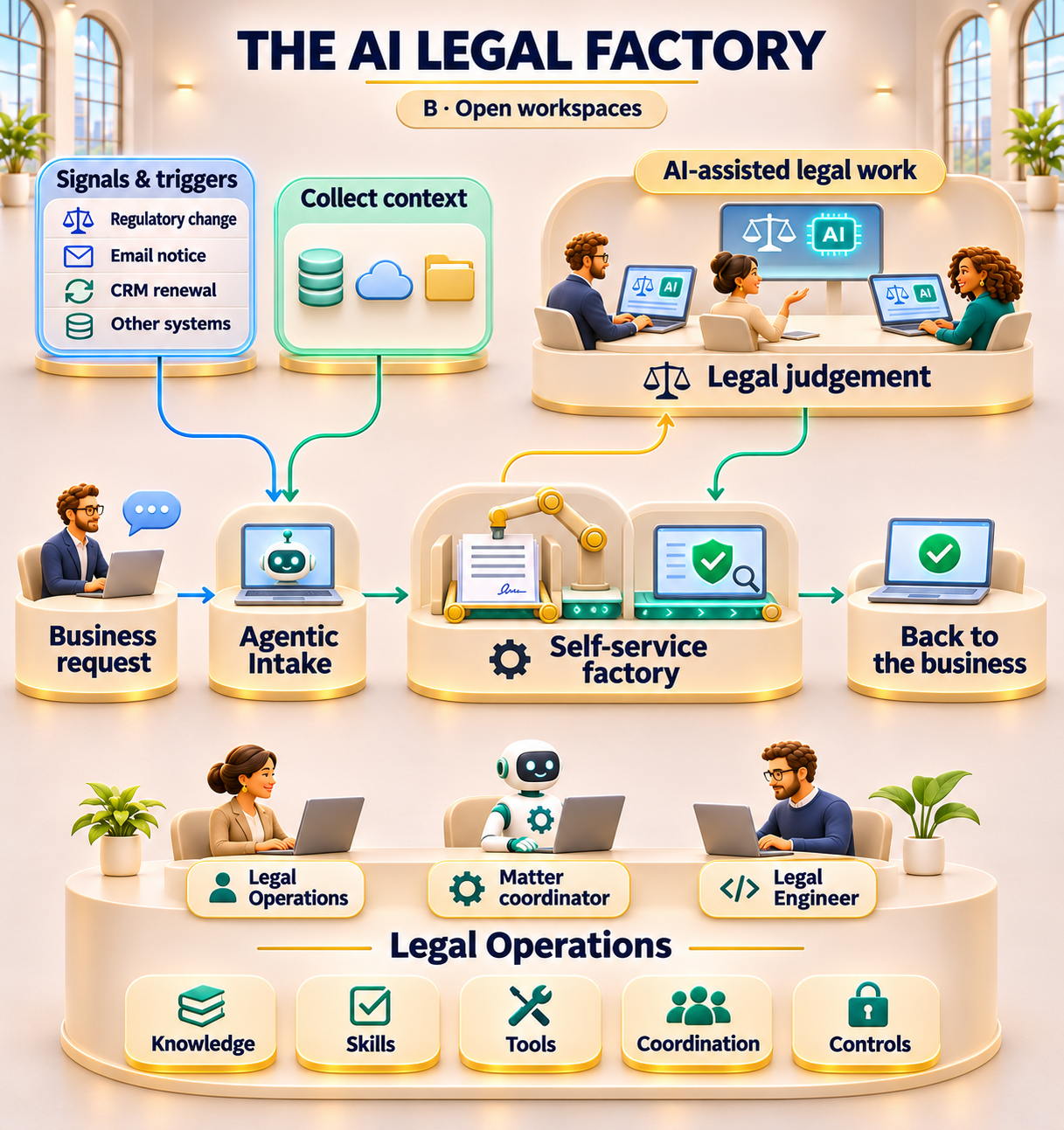
Select a numbered area of the factory to see what changes and how its impact could be measured.
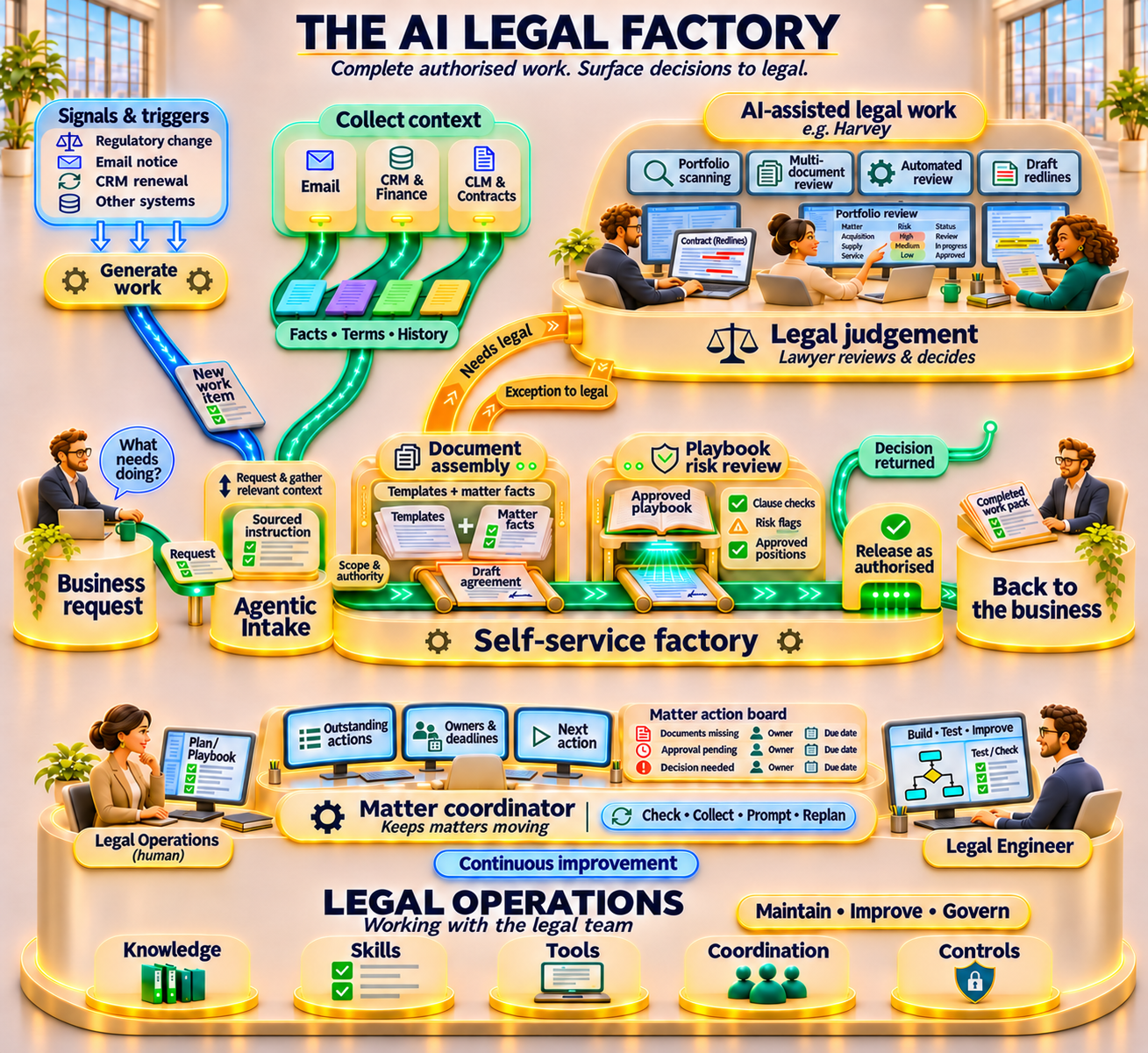
The matter coordinator spans the factory stages, tracking and following up on work within the capabilities maintained by Legal Operations and the legal team. The matter board and its statuses are illustrative, not live.
Triggers generate work. Intake gathers context. A regulatory change, notice, renewal or event from another system opens a candidate work item. Intake then collects relevant facts, terms and history to form a sourced instruction, just as it does for a business request.
The factory assembles documents from approved templates and matter facts, checks clauses and risks against the playbook, and releases work under agreed authority.
An issue rises with evidence and a recommendation. AI tools support portfolio scanning, multi-document review, automated review and draft redlines. The lawyer reviews and decides; the decision can return to execution.
Legal Operations and the Legal Engineer work with the legal team to maintain and improve these capabilities; the automated coordinator runs matter actions within them.
A NEW PATH INTO THE FACTORY
A request is one way work begins. A signal can reveal a need before anyone asks. Both enter the same agentic intake, where evidence, authority and next steps are made clear.Three fictional examples · Demonstration only · No live integrations
A person asks for help with a defined need.
An event or change, including an event from another system, suggests a need for attention. Intake gathers relevant context.
Generate a candidate work item. Gather context. Assess, connect, decide and route with evidence.
Act — create an appropriate task or instruction within authority.
Monitor — retain the signal and revisit when a condition changes.
Dismiss — record why no action is needed, with the source retained.
The distribution walkthrough, negotiation loop and deal coordinator below show an existing, separate illustrative matter—not the selected signal.
A CLOSER LOOK / AGENTIC INTAKE
Follow one distribution agreement. See what each source adds, what remains uncertain and when legal is needed.Illustrative example · Northstar Devices · Fictional facts
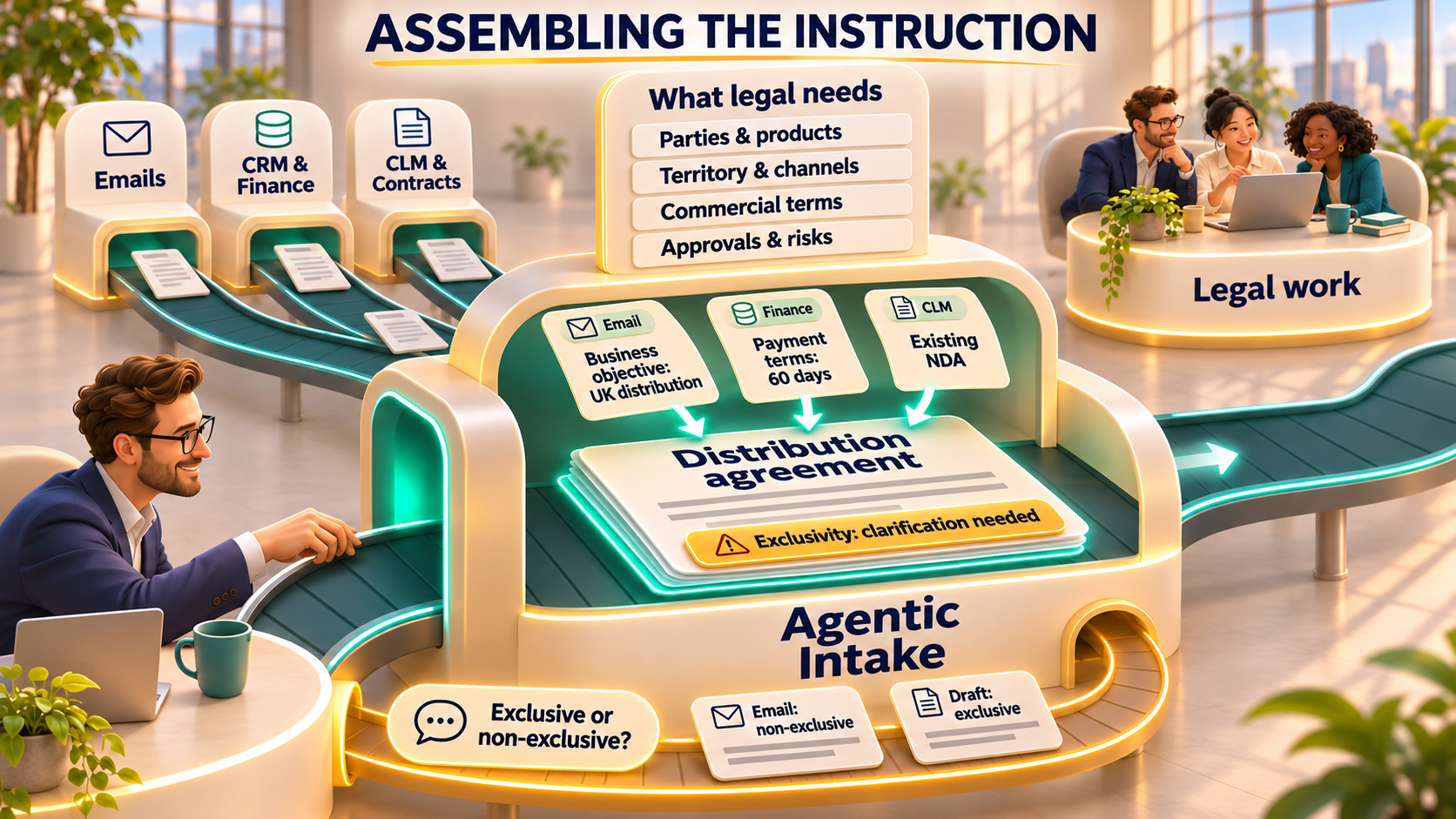 THE SAME MATTER. MORE CONTEXT.
THE NEGOTIATION LOOP
A matter rarely travels in a straight line. Each returned draft joins the same record, bringing new changes, decisions and dependencies.
Issue · evidence · recommendation
Decision returns to the factory ↓Apply the playbook and current instructions. Escalate changes beyond authority.
Review the proposal, accept positions or return changes and questions.
Changes within approved positions can continue through the factory. New exceptions, uncertainty or approval requirements pause the affected work and surface a decision. The business may also need to confirm commercial intent.
THE ROLE THAT KEEPS THE MATTER MOVING
Across intake, negotiation and approval, the coordinator maintains the action plan, gathers outstanding items and brings blockers to the right person.
This demonstration changes only this page. No messages are sent and no systems are connected.
Collect the evidence. Match incoming approvals, documents and replies to the right outstanding action, retaining the source.
Keep ownership clear. Track who needs to act, the requested date and which tasks depend on their response.
Escalate the blocker. Surface overdue work, conflicting updates and decisions outside authority. Send reminders only within configured permissions.
The coordinator runs on scheduled checks and relevant matter events. It organises and follows up; it does not invent approvals, accept new commercial positions or replace legal judgement.
ONE SYSTEM. TWO ROUTES.
Self-service does the work, from a sourced instruction to an authorised work pack.
When there is an exception, uncertainty or authority limit, legal receives the issue, evidence and proposed next step. A decision can return work to the factory.